Is There Really a Truck Driver Shortage? What the Data Actually Shows
Yes, but it's a retention problem, not a licensing one. The U.S. already has 2.1 million truck drivers, and the industry still needs 1.2 million more over the next decade, here's what the real federal and industry data says.
Published October 15, 2026 at 12:06 AM EDT by Chris Nesbitt
eldtindustry-datatruck-driver-shortage
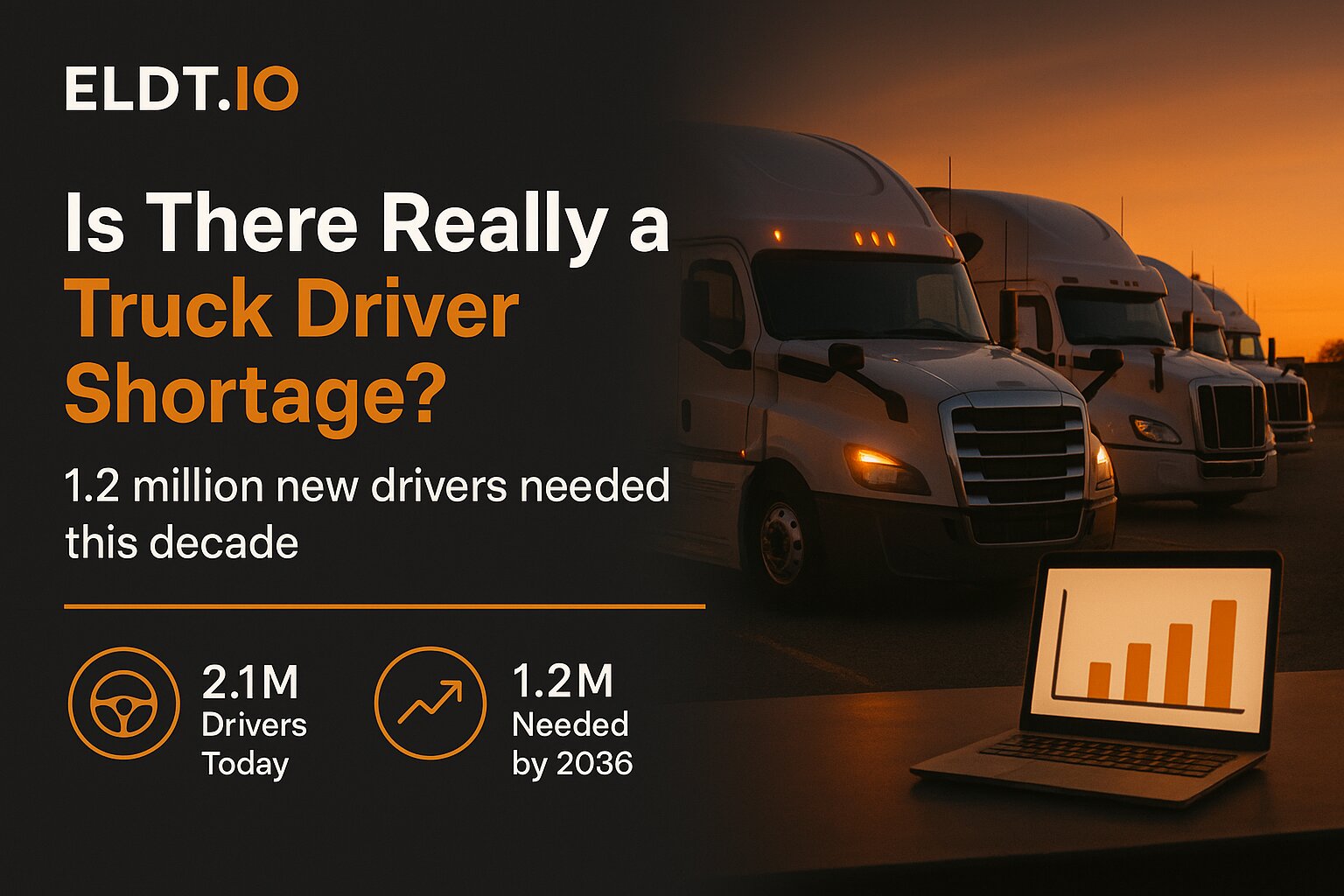
Yes, but not the way most headlines describe it. The United States doesn't have too few people with a commercial license, it has too few drivers willing to stay in the seat. The trucking industry needs roughly 1.2 million new drivers over the next decade, and the current gap runs somewhere between 78,000 and 82,000 depending on which year's count you're reading.
Every few months another headline claims trucking is short a few hundred thousand drivers, as if there simply aren't enough licensed people in the country.
There are.
The Bureau of Labor Statistics counted nearly 2.1 million heavy and tractor-trailer truck drivers working in the U.S. as of May 2025, earning a mean annual wage of $59,710. New CDL holders earn their license every single week, in every state. The number that actually drives those shortage headlines, the one the American Trucking Associations tracks, is closer to a retention problem than a licensing one.
ATA chief economist Bob Costello put the current shortfall at roughly 78,000 to 82,000 drivers, a figure that moves year to year with freight demand and the economy. The larger number is the one that matters if you're deciding whether to get a CDL right now: the industry needs to find about 1.2 million new drivers over the next ten years just to keep freight moving, covering retirements, career changes, and growth in shipping volume.
That's not a shortage you fix by convincing more people to take a written test once. It's a pipeline that has to keep producing new, qualified drivers year after year, continuously, for a decade.
Which is where ELDT actually fits into this story. Entry-Level Driver Training became a federal requirement under 49 CFR Part 380 in 2022, and it exists specifically to make sure the people entering that pipeline are actually ready for the job, not just licensed on paper. The training requirement didn't create the shortage and it won't solve it by itself. But every one of those 1.2 million drivers the industry needs has to go through it first.
If the data says anything useful for someone weighing a CDL right now, it's this: the job openings are real, the pay is documented by the federal government rather than a recruiting ad, and the training requirement standing between you and a seat behind the wheel is a known, fixed cost. $15 a course here, a few hours of study, done.
The shortage headlines will keep running every few months, with whatever number sounds most alarming that quarter. The federal numbers underneath them haven't actually moved that much.