How to Study for the ELDT Theory Test and Pass Your CDL Practice Test
Published October 29, 2026 at 11:30 PM EDT by Chris Nesbitt • Updated October 30, 2026 at 1:59 AM EDT
About 12 minute read.
Most people study for the ELDT theory test and the CDL knowledge test the way they studied for everything else in school: read it once, maybe twice, then take the test. Memory research says that's close to the least effective way to do it. Two things beat it by a wide margin, testing yourself instead of rereading, and spacing your study out instead of doing it all in one sitting. A third factor matters just as much and gets ignored completely: being rested. Here's what the published research shows, what our own data on hundreds of real ELDT students backs up, and where being tired turns out to hurt studying for a test the same way it hurts driving a truck.
Key takeaways
- Test yourself, don't just reread. Practice questions and self-quizzing are the single highest-utility study technique in controlled research, rereading and highlighting are rated low-utility.
- Spacing beats cramming for anything you need to remember later. Massed study only wins on a test taken immediately, that edge disappears within a day or two.
- Our own data shows the same pattern, honestly reported. Students who study in one sitting score slightly higher on same-day quizzes (82.4% vs 77.4%), but score lower on checkpoint accuracy (71.6% vs 74.9%), which lines up with what the research predicts rather than contradicting it.
- Checkpoint performance strongly predicts quiz success. 90%+ checkpoint accuracy correlates with an 84.9% first-attempt quiz pass rate, versus 73.6% when checkpoint accuracy is under 75%.
- Fatigue is the variable almost nobody accounts for. Being awake 18 hours impairs performance roughly as much as a 0.08% blood alcohol level, the legal driving limit nationwide. The same impairment affects studying and test-taking, not just driving.
What the ELDT theory test actually covers
ELDT, Entry-Level Driver Training, is the FMCSA-mandated theory curriculum required before you can take your CDL knowledge test for a Class A, Class B, or hazmat endorsement. It's not the same thing as the CDL knowledge test itself, ELDT is the required training you complete first, and your state's CDL knowledge test (sometimes called the CDL practice test when you're prepping for it) is what you actually sit for at the DMV. Both draw from the same core material: the CDL manual's safety, regulatory, and vehicle-operation content. Studying well for ELDT theory is, in practice, studying for the CDL knowledge test, since the content overlaps heavily.
Try our free CDL practice tests › if you want to start testing yourself on real content right now instead of just reading about how to do it.
Why CDL practice tests work better than rereading
In 2013, a team of cognitive scientists led by John Dunlosky at Kent State reviewed the actual research behind ten popular study techniques and rated each one on how well it holds up in controlled studies. The results surprised a lot of people, because the techniques most students default to turned out to be the weakest ones.
| Technique | Utility |
|---|---|
| Practice testing (CDL practice tests, self-quizzing) | High |
| Distributed practice (spacing it out) | High |
| Interleaved practice (mixing topics) | Moderate |
| Elaborative interrogation / self-explanation | Moderate |
| Rereading | Low |
| Highlighting / underlining | Low |
| Summarization | Low |
Source: Dunlosky, J., Rawson, K.A., Marsh, E.J., Nathan, M.J., & Willingham, D.T. (2013). "Improving Students' Learning With Effective Learning Techniques." Psychological Science in the Public Interest, 14(1).
In a well-known 2006 study, Henry Roediger and Jeffrey Karpicke had students read a passage and then either reread it or try to recall it from memory. A week later, the students who practiced recall remembered 61% of the material. The ones who just reread it remembered 40%. Same study time, same material, a 21-point gap a week later. That's why every ELDT.IO unit ends in a scenario-based checkpoint instead of a quick recall question, you're put in a situation and asked what you'd actually do, which forces real retrieval instead of recognition.
How to study for ELDT testing: what the research says about spacing
Highlighting your unit text, rereading it the night before a CDL practice test, and writing a summary all feel like studying. Research shows they barely work. The research on distributed practice is specific: massed study (cramming) wins on a test taken right after studying, but that edge disappears within a day or two. Distributed practice's real advantage, measured in controlled studies at roughly 15 percentage points, shows up on delayed tests, days or weeks later. That's exactly what the real DMV knowledge test is: a delayed test, taken after you've finished ELDT theory, not during it.
What our own ELDT.IO data shows
We pulled a sample of real pass-rate, checkpoint, and completion data from the platform, queried fresh on October 30, 2026, and split it by how many separate days a student was active during their course: one sitting, 2-3 days, or 4 or more.
First-attempt quiz pass rate by study-spacing pattern, from a sample of completed ELDT.IO enrollments, queried October 30, 2026.
At first glance that looks backwards, decades of spacing research say spreading out your study beats cramming. But these are per-unit quizzes, taken immediately after reading that unit, and massed study wins specifically on immediate tests. Checkpoint data tells a different, complementary story:
| Study pattern | Checkpoint accuracy | Quiz first-attempt pass | Course completion rate |
|---|---|---|---|
| One sitting (1 day) | 71.6% | 82.4% | 77.5% |
| 2-3 days | 73.3% | 80.4% | 77.9% |
| Spread out (4+ days) | 74.9% | 77.4% | 75.0% |
ELDT.IO first-party data, queried October 30, 2026, based on a sample of scenario-based checkpoint responses across groups. Completion rate: share of sampled enrollments that reached status "completed."
Checkpoint accuracy moves in the opposite direction from quiz pass rate, spread-out students do better on checkpoints but worse on the immediate quiz. That's a cleaner confirmation of the spacing explanation, checkpoints happen mid-unit, closer to when spaced-out students are re-engaging with fresher context from a prior session, while quizzes land right at the end when massed students still have everything loaded in short-term memory. Course completion rate barely moves at all (75-78% across every pattern), spacing doesn't meaningfully predict whether someone finishes, only how they perform along the way.
One more real correlation worth reporting: units where a student scored 90%+ on checkpoints had an 84.9% first-attempt quiz pass rate. Units with under 75% checkpoint accuracy had a 73.6% pass rate. Checkpoint performance, the retrieval-practice-in-action moment, predicts quiz success far more strongly than spacing pattern does on its own.
We don't track students to the actual DMV test, so we can't measure long-term retention directly. We're not going to claim our numbers say more than they do.
Driver fatigue in trucking: what the research shows
If you've been driving professionally for any length of time, you already know the industry built an entire set of federal rules around one fact: tired people make worse decisions and don't realize it. Research on sleep deprivation has established a specific, well-documented equivalence between hours awake and measurable impairment:
| Hours awake | Equivalent impairment |
|---|---|
| 17 hours | ~0.05% BAC (roughly double normal crash risk) |
| 18 hours | ~0.08% BAC (the legal driving limit in all 50 states) |
| 24 hours | ~0.10% BAC (above the legal limit everywhere) |
Sources: sleep-deprivation and driving-performance research cited by the AAA Foundation for Traffic Safety and the National Highway Traffic Safety Administration; see further reading below.
FMCSA's own Large Truck Crash Causation Study found that driver fatigue was a factor in roughly 13% of large truck crashes involving injury or death, the seventh most common contributing cause overall. FMCSA's separate Driver Fatigue and Alertness Study, one of the most comprehensive over-the-road studies of commercial driver alertness ever conducted, found that driver alertness and performance tracked time-of-day more consistently than hours-of-service, and that drivers' own sense of how alert they felt did not match objective measures of their actual performance.
Start your ELDT theory course › when you're actually rested, not wedged between a long haul and a short nap, it makes a real difference.
Rested and ready: the rule behind both driving and studying
This is the whole angle of this article, stated plainly: the same blind spot that makes fatigued driving dangerous also makes fatigued studying and testing worse, and in both cases, people underestimate how impaired they are. Sleep-deprivation research on memory shows the same disconnect FMCSA found behind the wheel: people don't generally feel impaired while it's happening, they just encode and recall new information worse anyway. A short study session when you're actually rested beats a long one when you're running on fumes, the same way a short, alert stretch behind the wheel beats pushing through exhaustion.
This isn't a new idea. Edward Thorndike's Law of Readiness, one of the foundational principles of learning theory taught in instructor-certification programs including NFPA 1041, states plainly that a learner has to be in a state of readiness, physically and mentally, for learning to take hold well. A tired brain isn't ready, no matter how much material gets put in front of it. Thorndike's Law of Effect is the other half of why ELDT.IO's checkpoints work the way they do: a response followed by immediate, meaningful feedback gets strengthened far more than a response with no feedback at all, which is the same mechanism behind the testing effect covered earlier in this article. Readiness and effect aren't competing ideas, they're both describing the same thing from different angles: learning depends on the state you're in and what happens right after you try to recall something, not just on how much time you spend with the material.
Trucking already has a safety culture built around this exact idea, hours-of-service rules, mandatory breaks, the whole framework exists because the industry accepted that you can't trust how awake you feel. Apply the same standard to your own ELDT study schedule and CDL practice test prep: don't trust how awake you feel to decide whether now is a good time to study, any more than you'd trust it to decide whether you're fit to drive.
What this means for your CDL test prep
- Don't just reread the unit text. When you finish a section, close it and try to explain it back to yourself, or answer the checkpoint before peeking at the material again.
- Don't do all four ELDT courses in one caffeine-fueled afternoon the night before your CDL knowledge test. Spread it across several days, your per-unit quiz score might not show the benefit, but your memory weeks later likely will.
- Study when you're actually rested, not when you're wedged between a long haul and a short nap. Treat it the same way you'd treat deciding whether you're fit to get behind the wheel.
- Take the free CDL practice tests seriously. They're retrieval practice, the single highest-utility study technique in the research, not busywork before the real thing.
Methodology
- Published research: cited by name and year throughout this article, covering the testing effect (Roediger & Karpicke, 2006), study-technique utility rankings (Dunlosky et al., 2013), distributed practice versus massed practice, sleep deprivation's effect on memory encoding and consolidation, and FMCSA's own Large Truck Crash Causation Study and Driver Fatigue and Alertness Study.
- Our own first-party data: pulled directly from the ELDT.IO production database on October 30, 2026, covering a sample of first-attempt quizzes, scenario-based checkpoint responses, and completed enrollments.
- How we compared them: every number from our own data is reported with its sample size next to it. Where our data appeared to contradict the published research (the one-sitting quiz-pass-rate finding), we explained the likely reason, immediate versus delayed testing, rather than picking whichever framing looked better.
- What we didn't measure: we don't track students to their actual DMV test date, so we have no direct data on long-term retention, only on same-day quiz and checkpoint performance.
About Chris
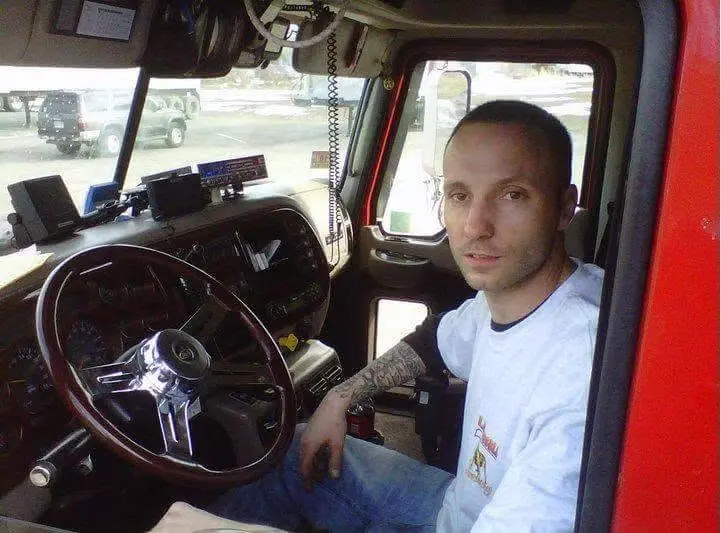
Chris Nesbitt has been a Class A CDL driver since 2007, and is also a New Hampshire Firefighter II, EMT, and State Fire Instructor. He builds ELDT.IO's curriculum using real student data and the instructional design methods from his NFPA 1041 instructor training, aiming for content that's genuinely useful, not just what's trendy to publish.
Questions people ask
What's the single best way to study for the ELDT theory test and CDL practice test?
Test yourself on the material instead of just rereading it. Practice questions and self-quizzing are rated as the highest-utility study technique in controlled research (Dunlosky et al., 2013), well ahead of rereading, highlighting, or summarizing.
Is cramming the night before the CDL test actually bad?
Cramming can work for a test taken immediately, but that advantage fades within a day or two. Since the real DMV knowledge test typically happens after you've finished studying, not during it, research on distributed practice says spacing your study across several days gives better retention by the time you actually sit for the test.
Does ELDT.IO's own data prove spacing out your studying is better?
Not directly, and we don't overstate it. Our data shows students who complete a course in one sitting pass their immediate per-unit quizzes at a slightly higher rate (82.4% vs 77.4% for students spread over 4+ days, based on a sample of our enrollments), but score lower on checkpoint accuracy (71.6% vs 74.9%). That split matches research showing massed practice wins on immediate tests while spaced practice's advantage shows up on delayed retention, which we don't have data on since we don't track students to the actual DMV test.
Does checkpoint performance predict whether I'll pass the quiz?
Yes, strongly. In our data, units where a student scored 90% or higher on checkpoints had an 84.9% first-attempt quiz pass rate, versus 73.6% for units with under 75% checkpoint accuracy (ELDT.IO data, October 30, 2026).
Does being tired actually affect studying, or just driving?
Both. Research shows that being awake for 18 hours impairs performance roughly as much as a 0.08% blood alcohol level, the legal driving limit nationwide, and FMCSA's own research found driver alertness tracked time-of-day more than hours worked, with self-rated alertness not matching actual performance. Sleep research shows the same pattern for memory and learning: people don't feel impaired, but encoding and recall measurably suffer anyway.